
Ventriculoperitoneal (VP) Shunt
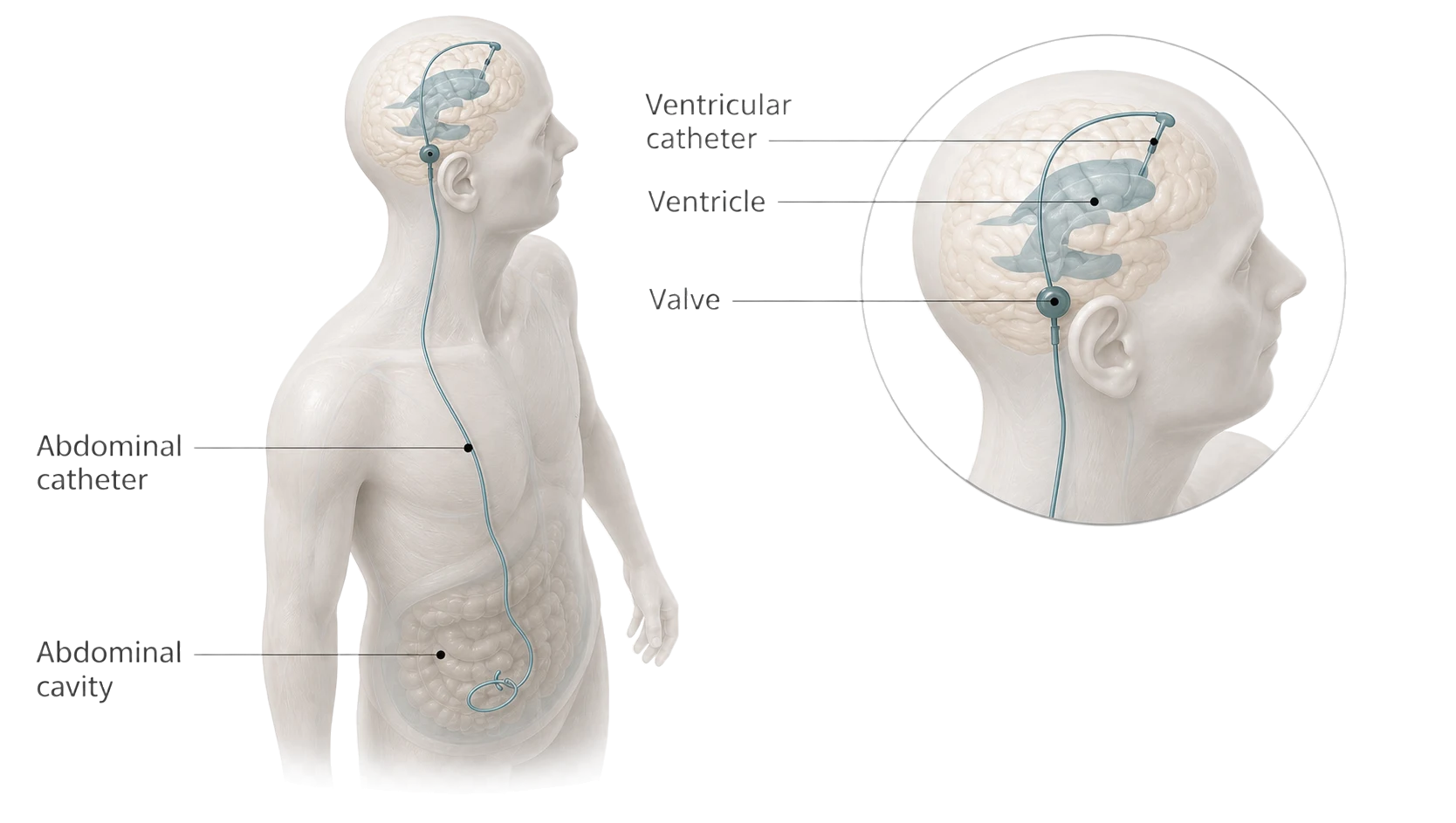
A ventriculoperitoneal (VP) shunt is a small implanted tube and valve system that drains excess fluid from the brain to the abdomen. It is used to treat selected patients with hydrocephalus.

Understanding the Procedure
What is a VP Shunt?
A ventriculoperitoneal (VP) shunt is an operation to treat hydrocephalus, a condition in which cerebrospinal fluid (CSF) builds up in the fluid-filled spaces of the brain (ventricles).
The shunt diverts excess fluid from the brain to the abdomen, where it is naturally absorbed by the body.
A thin tube is placed into a ventricle and connected to a valve beneath the scalp. A second tube runs under the skin to the abdomen.
The shunt is a long-term implant. Some shunts have programmable valves that allow the surgeon to adjust fluid drainage.
Indications
When is this Procedure Recommended?
A VP shunt may be recommended when hydrocephalus is causing symptoms and diverting excess fluid is likely to help.
Common reasons include:
- Normal pressure hydrocephalus (NPH), particularly when walking and balance have become affected.
- Other forms of symptomatic or progressive hydrocephalus caused by problems with CSF drainage.
The decision is based on your symptoms, examination and brain scans. For suspected NPH, tests involving temporary drainage of spinal fluid may help predict whether surgery will improve walking.
The Procedure
What Happens During Surgery?
- The operation is performed under general anaesthesia.
- Small incisions are made in the scalp and abdomen.
- Through a small opening in the skull, the surgeon places a thin catheter into one of the brain's ventricles.
- The catheter is connected to a valve positioned beneath the scalp. A second tube is passed under the skin to the abdomen.
- The abdominal end of the tube is positioned so that the drained fluid can be absorbed by the body.
- The shunt is checked and the incisions are closed.
Related Conditions
Benefits
Potential Benefits
The aim of a VP shunt is to improve the drainage of CSF and relieve symptoms caused by hydrocephalus.
Potential benefits include:
In NPH (Normal Pressure Hydrocephalus) improvement in walking and balance is the most predictable benefit. Some patients also notice improvement in bladder control, memory and thinking.
In other forms of hydrocephalus, a shunt may improve headaches or other symptoms caused by fluid build-up and help prevent further neurological deterioration.
The degree of improvement varies with the cause of hydrocephalus and how long symptoms have been present.
After the procedure
Recovery After Surgery
Most patients spend around 2–4 nights in hospital. The exact stay depends on the reason for surgery and how well you recover.
Some tenderness around the scalp and abdominal incisions is expected. There may also be mild discomfort along the path of the tube under the skin. This usually settles over the following weeks.
Walking and gentle activity are encouraged once it is safe. Increase activity gradually and avoid strenuous exercise or heavy lifting until your surgeon advises otherwise.
Physiotherapy or rehabilitation may be helpful, particularly if hydrocephalus has affected your walking, balance or confidence with daily activities.
In NPH, some patients notice improvements in walking within days or weeks, while further progress may occur over several months. Changes in memory or bladder symptoms are less predictable and often more gradual.
Driving restrictions vary depending on the underlying condition and symptoms. Your surgeon will provide individual advice.
Return to work depends on the underlying diagnosis, recovery, and the type of work performed.
Follow-up is arranged in the first few weeks to review your recovery and shunt function.
Some patients require adjustments to the valve and longer-term monitoring.
Important: Tell your imaging team if you have a shunt. Some programmable valves need their settings checked after an MRI scan.
Potential Complications
Risks and Complications
Most patients don’t have complications but recognised surgical risks include:
- Infection or bleeding
- Blood clots
- Complications related to anaesthesia
- Shunt blockage, disconnection or movement
- Infection involving the shunt
- Too much or too little fluid drainage, sometimes causing headaches or bleeding around the brain
- Catheter malfunction
- Persistent symptoms
- The need for valve adjustment or further surgery
A shunt usually stays in place long term. Problems can occasionally arise months or years after surgery, so new or returning symptoms should be assessed.
Your surgeon will discuss risks relevant to your individual circumstances.
Seeking Advice About Hydrocephalus?
Our team can review your symptoms and scans, explain the treatment options and help determine whether surgery is likely to help.