Lumbar Decompression
Lumbar decompression is an operation to relieve pressure on nerves in the lower back. It is most often performed to improve leg symptoms (such as pain, numbness, weakness) and walking difficulties caused by spinal stenosis.
Understanding the Procedure
What Is a Lumbar Decompression?
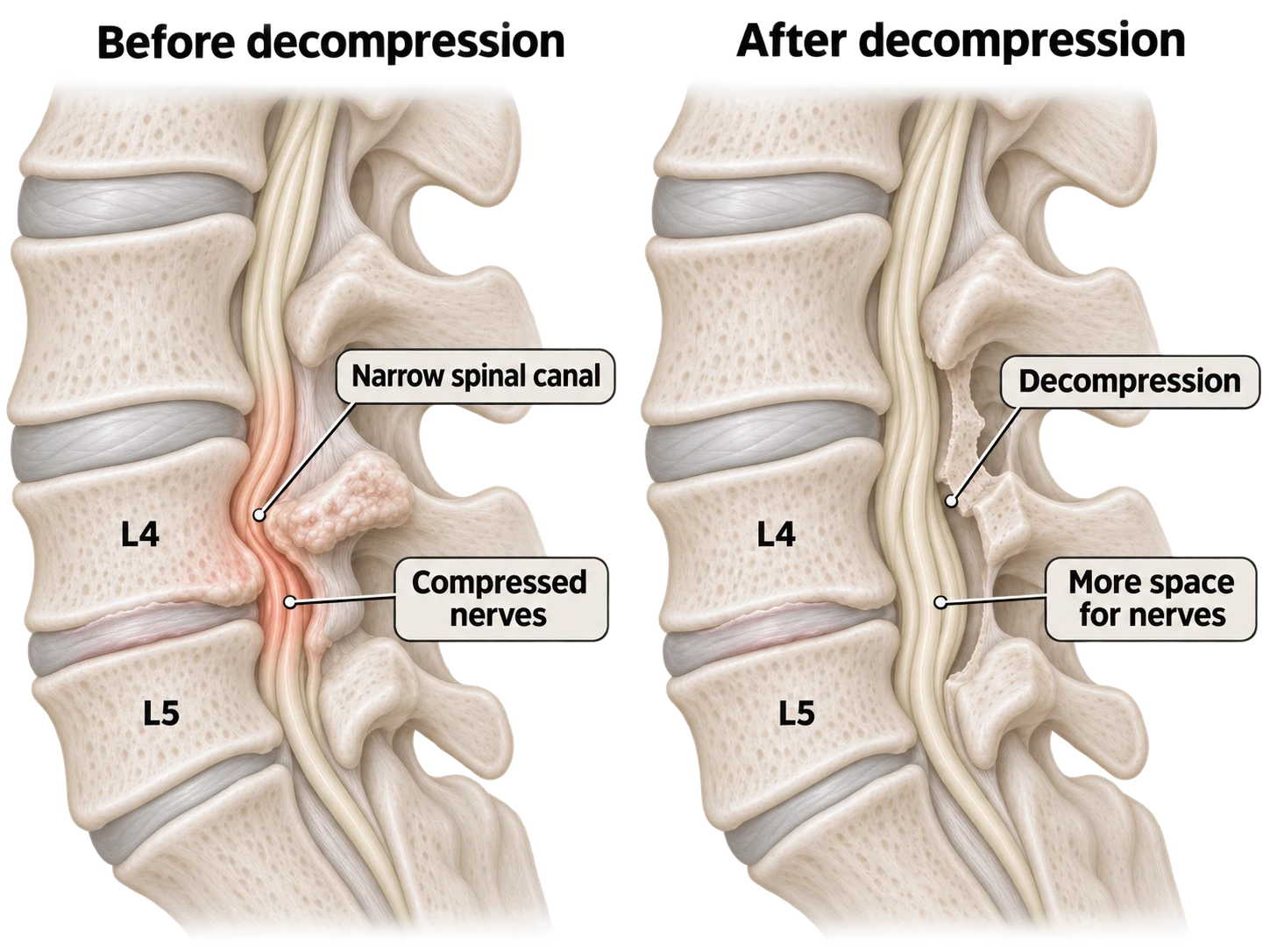
Lumbar decompression creates more space for nerves that have become compressed in the lower back.
With age, bulging discs, arthritic spine joints (facet joints), bone spurs and thickened ligaments can narrow the spinal canal. This may cause aching, heaviness, tingling or numbness in the legs, particularly when standing or walking.
Our Surgical Approach
Lumbar decompression can involve removing larger sections of the lamina (laminectomy), the bone forming the roof of the spinal canal.
Professor van Gelder instead uses minimally invasive microsurgical techniques, removing small amounts of bone through targeted openings (laminotomies) and thickened ligament to relieve pressure on the affected nerves.
This approach preserves more of the spine's natural supporting structures, with the aim of maintaining spinal stability and reducing the risk of needing spinal fusion surgery in the future.
Indications
When is this Procedure Recommended?
Lumbar decompression may be considered when spinal stenosis causes troublesome leg symptoms or limits walking, despite appropriate non-surgical treatment.
Common reasons include:
- Leg pain, heaviness or tingling brought on by standing or walking, often relieved by sitting or leaning forward (neurogenic claudication).
- Persistent pain or numbness travelling into the leg because of nerve compression.
- Significant or worsening leg weakness in selected patients.
The decision depends on how much your symptoms affect daily life, your neurological examination and whether the MRI findings explain your symptoms. Narrowing on a scan alone does not mean surgery is necessary.
Decompression is generally more effective for nerve-related leg symptoms and walking difficulties than for back pain alone.
The Procedure
What Happens During Surgery?
Professor van Gelder performs lumbar decompression using minimally invasive microsurgical techniques and an operating microscope. The operation is performed under general anaesthesia.
- A small incision is made in the lower back over the affected spinal level.
- A small opening is made in the lamina (laminotomy), rather than removing the entire bone.
- Through this opening, the surgeon carefully removes thickened ligament and any bone spurs pressing on the nerves. The spinal canal and nerve openings are widened where needed to relieve compression.
- The wound is closed and covered with a dressing.
The aim is to free the compressed nerves while preserving as much of the normal spinal structures as possible.
Related Conditions
Benefits
Potential Benefits
The main aim of lumbar decompression is to relieve pressure on the nerves and improve walking and everyday activities.
Potential benefits include:
- Less leg pain, heaviness or tingling
- Improved walking and standing tolerance
- Improvement in numbness or weakness in some patients
Leg symptoms and walking may improve within days to weeks, while strength and sensation can take several months to recover. Longstanding symptoms may not fully resolve.
After the procedure
Recovery After Surgery
Most patients stay in hospital for 1–2 nights and return home once they are walking safely and their pain is controlled.
Some wound discomfort and back stiffness are normal in the first few weeks. Leg pain may improve quite soon after surgery, although numbness or weakness can take longer to recover.
Walking is encouraged from the first day after surgery. Increase your activity gradually, but avoid heavy lifting, repetitive bending, twisting and strenuous exercise during the first 4–6 weeks, or as advised by your surgeon.
A preoperative assessment with a spine physiotherapist can help you prepare for surgery. Rehabilitation usually begins around 4 weeks afterwards, depending on your recovery, and focuses on walking, strength, confidence and returning to normal activities.
Driving can usually resume once pain is controlled, the patient can operate the vehicle safely and is no longer affected by strong pain medication.
This is generally reviewed at your 2-week postoperative appointment.
Some patients return to office-based work within 2–4 weeks. More physically demanding work, or surgery at several levels, may require longer recovery or a gradual return with modified duties.
Follow-up appointments are usually arranged at 2 and 6 weeks to review the wound, leg symptoms, walking and return to activity.
Potential Complications
Risks and Complications
Most patients don’t have complications but recognised surgical risks include:
- Infection and bleeding
- Blood clots
- Complications related to anaesthesia
- Persistent or incomplete relief of symptoms
- Nerve injury
- Cerebrospinal fluid leak (dural tear)
- Need for further surgery in some cases
Your surgeon will explain the risks relevant to your condition and the operation planned.
Considering Surgery for Lumbar Spinal Stenosis?
Not everyone with spinal stenosis needs surgery. Our team can review your symptoms and scans, explain whether decompression is likely to help, and discuss non-surgical alternatives.