
Cervical Foraminotomy
Cervical foraminotomy is an operation to relieve pressure on a nerve in the neck. It is used to treat arm pain, tingling, numbness or weakness caused by a compressed nerve.
Understanding the Procedure
What is a Cervical Foraminotomy?
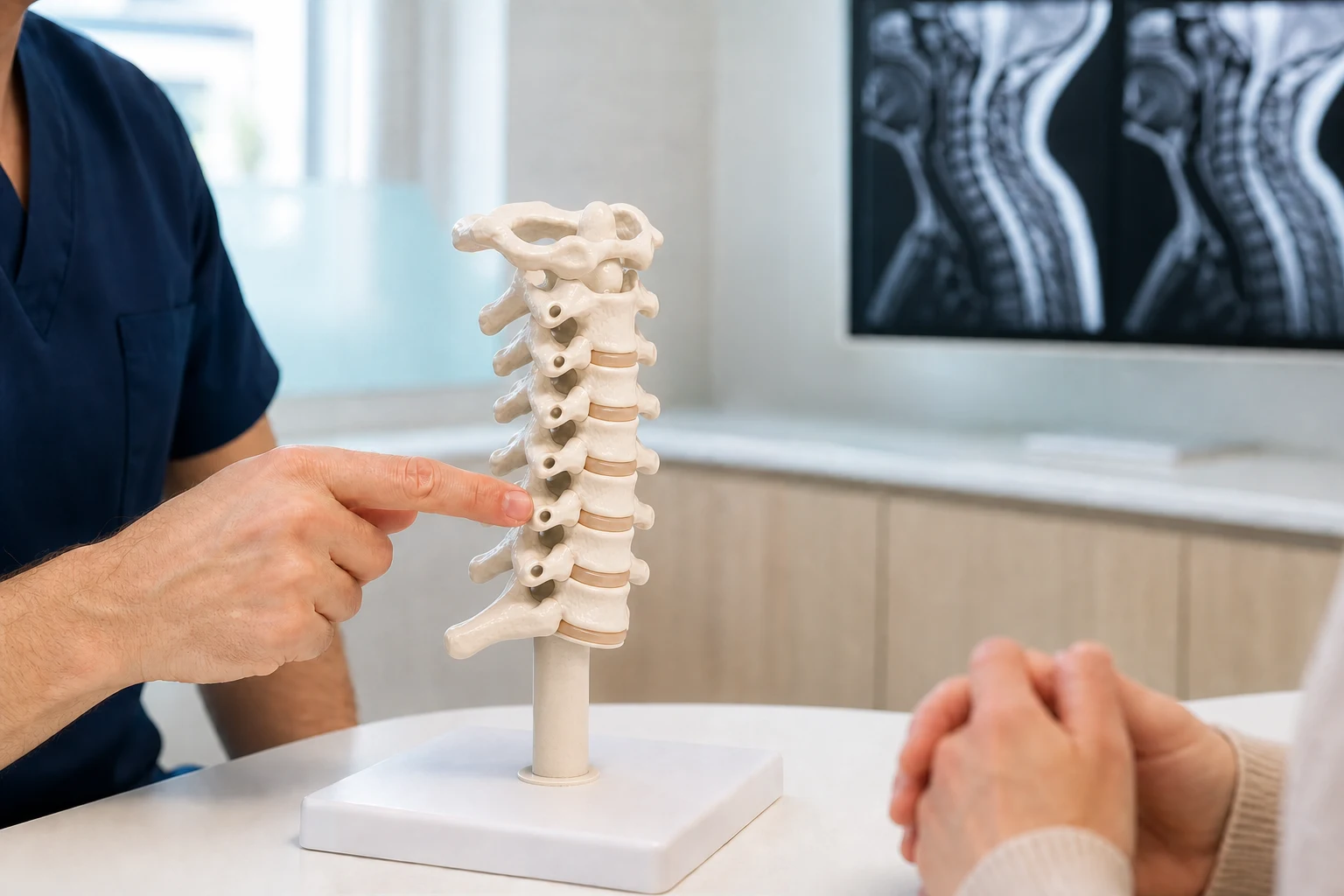
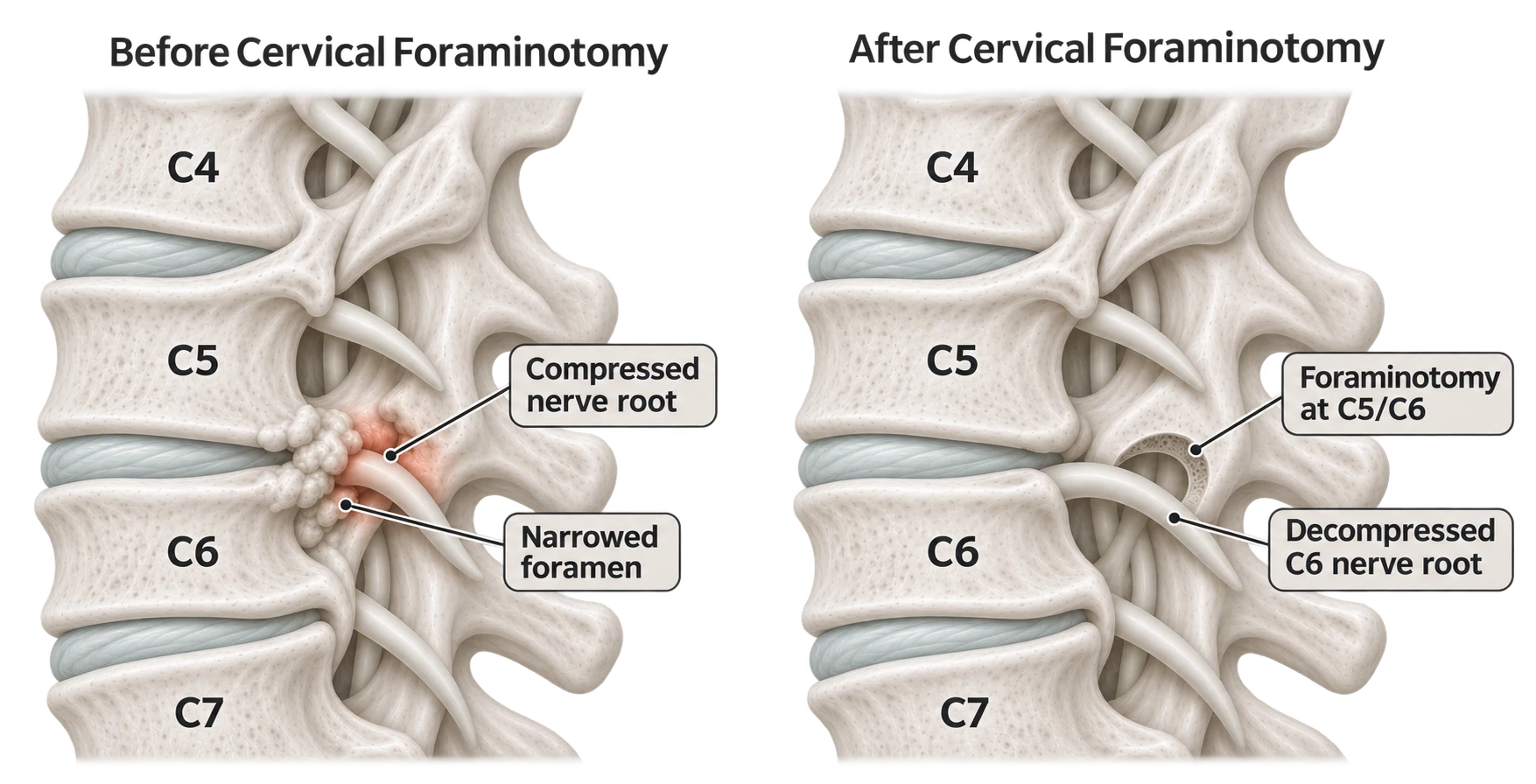
Nerves leave the spinal canal through small openings between the vertebrae. If an opening becomes narrowed by a bulging disc or arthritic changes, the nerve can become compressed.
Cervical foraminotomy creates more space around the compressed nerve. The operation is performed through a small incision at the back of the neck. Using microsurgical techniques the surgeon removes small amount of bone spurs (osteophytes) or herniated disc material to relieve the pressure on the nerve.
Unlike spinal fusion, this procedure preserves spine movement at the treated level.
Indications
When is this Procedure Recommended?
Surgery may be considered when nerve compression causes:
- Persistent pain travelling from the neck into the arm
- Numbness or tingling in the arm or hand
- Weakness in the shoulder, arm or hand
Common causes include a herniated cervical disc or narrowing around the nerve due to arthritis and bone spurs.
Surgery is usually considered when symptoms have not improved with appropriate non-surgical treatment, or when weakness is worsening.
The Procedure
What Happens During Surgery?
The operation is performed under general anaesthesia.
- A small incision is made at the back of the neck.
- The surgeon uses an operating microscope and specialised instruments to reach the compressed nerve.
- A small amount of bone, ligament or disc material is removed to create more space and relieve nerve pressure.
- The wound is closed and covered with a dressing.
Related Conditions
Benefits
Potential Benefits
The main aim of cervical foraminotomy is to relieve pressure on a spinal nerve and improve symptoms affecting the arm.
Potential benefits include:
- Relief of radiating arm pain
- Improvement in numbness and tingling
- Recovery of muscle strength
- Improved sleep and daily activities
- Preservation of spinal movement without fusion
Arm pain may improve soon after surgery. Numbness and weakness often take longer to recover and may not resolve completely, particularly if the nerve has been compressed for a long time.
After the procedure
Recovery After Surgery
Your hospital stay is usually 1-2 days depending on the extent of surgery and how well you recover.
Some neck pain and discomfort around the wound are normal during early recovery. These symptoms usually improve over the following weeks.
Arm pain may improve quite quickly, while recovery of nerve function can take several months.
Walking is encouraged first day after surgery. Avoid heavy lifting and strenuous activities during the early recovery period. Gradually increase your activity as advised by your surgeon.
A spine physiotherapist can help you prepare for surgery and guide your recovery afterwards. Rehabilitation focuses on restoring neck movement, strength and confidence with everyday activities.
You can return to driving when you can turn your neck comfortably, control the vehicle safely and are no longer affected by pain or medication. Follow your surgeon's advice before resuming driving.
Many patients return to office-based work within 2–4 weeks. Jobs involving lifting or physical activity may require more time.
Follow-up appointments are usually arranged at 2 and 6 weeks to review wound healing, symptoms and recovery.
Potential Complications
Risks and Complications
Most patients don’t have complications but recognised surgical risks include:
- Infection or bleeding
- Blood clots
- Complications related to anaesthesia
- Incomplete relief or recurrence of arm symptoms
- Nerve injury, causing weakness or altered sensation
- Leakage of spinal fluid
- Occasionally the need for further surgery
Your surgeon will explain the risks relevant to your condition.
Considering Surgery for Neck or Arm Pain?
Not everyone with a compressed nerve needs surgery. Our team will assess your symptoms, examination findings and scans to help determine whether an operation is likely to help.