Craniotomy for Removal of a Brain Tumour
A craniotomy is an operation to remove all or part of a brain tumour. The aim is to treat the tumour while protecting normal brain function.
Understanding the Procedure
What is a Craniotomy?
A craniotomy is an operation in which a section of the skull (bone flap) is temporarily removed to access the brain and remove a tumour.
Brain tumours may be benign (non-cancerous) or malignant (cancerous). Not all require surgery. Some can be monitored with scans or treated by other methods.
When surgery is recommended, the aim is to remove as much of the tumour as safely possible while protecting normal brain function. The bone flap is usually replaced and secured at the end of the operation.
Our Surgical Approach
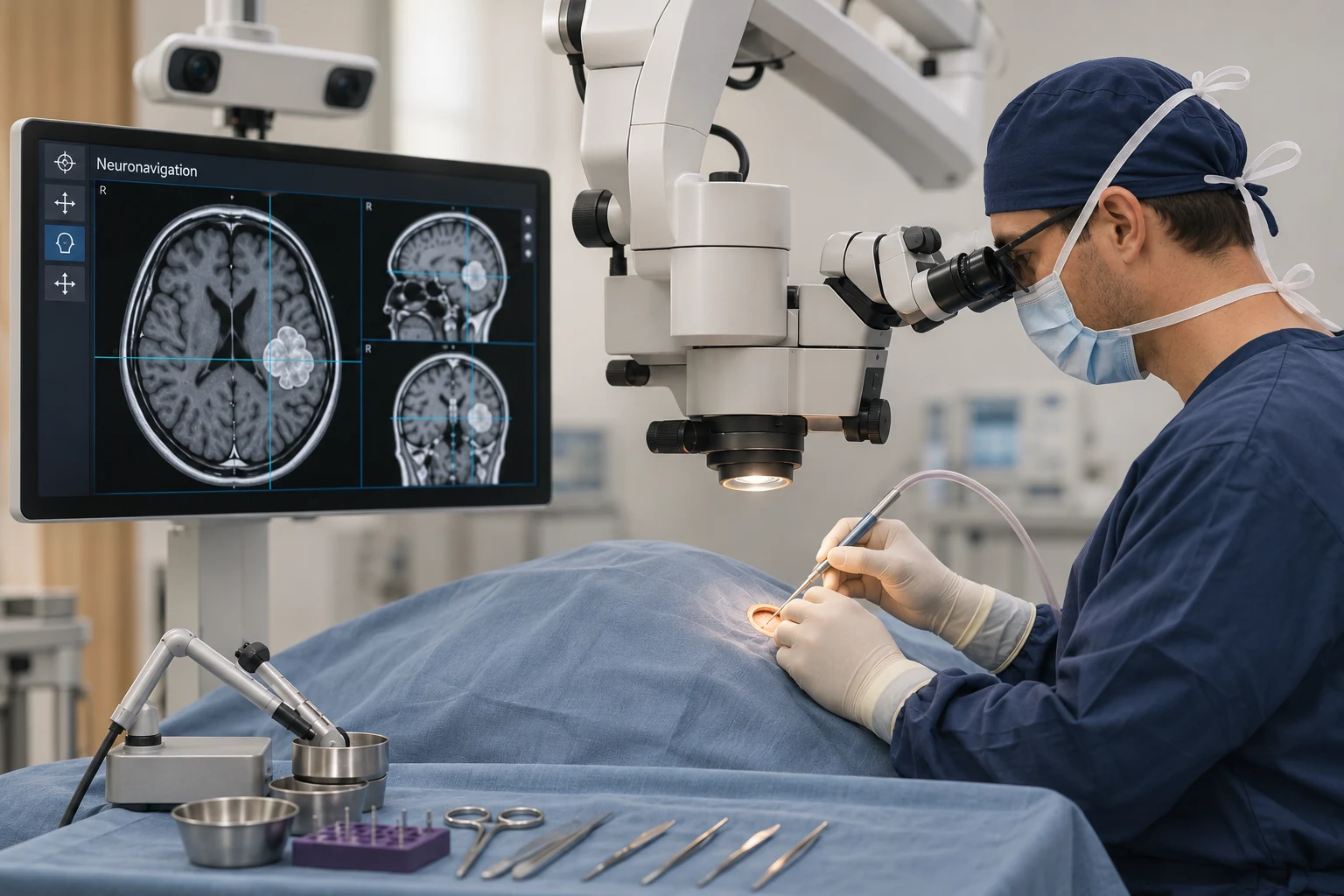
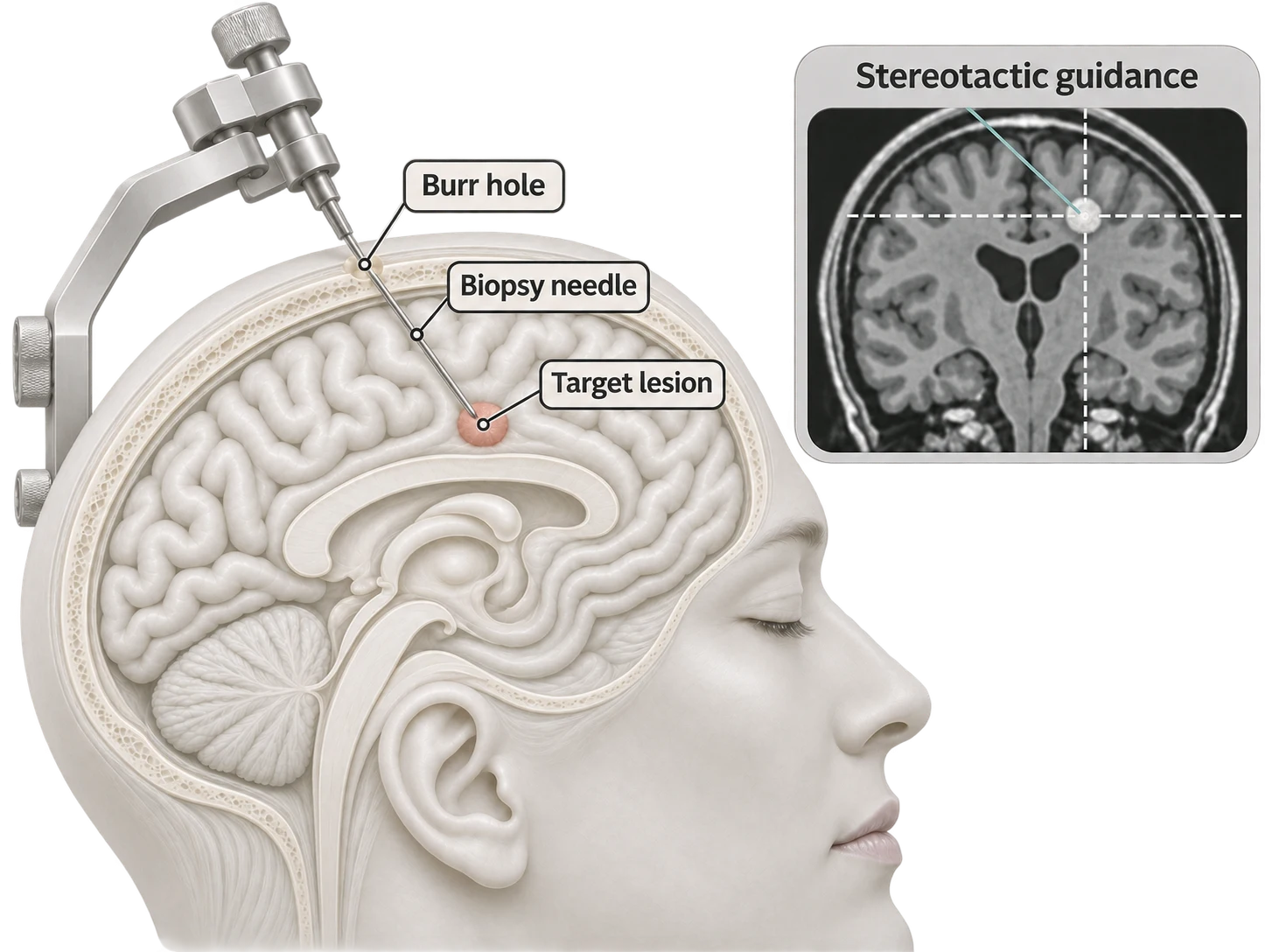
Professor van Gelder uses specialised stereotactic neuronavigation (computer-guidance) and microsurgical techniques to accurately locate the tumour and guide its removal.
The extent of surgery depends on the tumour's size, location and proximity to important areas of the brain responsible for movement, speech, vision and other functions.
The priority is safe tumour removal while preserving neurological function as much as possible.
Indications
When is this Procedure Recommended?
A craniotomy may be recommended when removing all or part of a tumour is likely to provide more benefit than the alternatives.
Reasons may include:
- A tumour that is growing or causing significant pressure on the brain.
- Symptoms such as seizures or changes in movement, speech, vision or balance that are linked to the tumour.
- The need to obtain tumour tissue for diagnosis when removal is appropriate.
The decision depends on the tumour type, size and location, your symptoms and general health, and the expected benefits and risks of surgery.
The Procedure
What Happens During Surgery?
- The operation is usually performed under general anaesthesia.
- The head is carefully positioned, and an incision is made in the scalp.
- A section of skull (bone flap) is temporarily removed to reach the tumour.
- Using stereotactic neuronavigation and an operating microscope, the surgeon carefully identifies and removes as much of the tumour as can be done safely. Tissue is sent for laboratory analysis.
- The protective covering of the brain is closed, and the bone flap is replaced and secured.
- The scalp wound is closed and covered with a dressing.
Related Conditions
Benefits
Potential Benefits
The aim is to treat the tumour while preserving brain function. Depending on the tumour, surgery may:
- Remove all or part of the tumour.
- Relieve pressure on the brain and improve associated symptoms.
- Provide tissue for a more precise diagnosis and guide further treatment.
Some symptoms improve after surgery, while others recover slowly or may not fully resolve. Complete tumour removal is not always possible or advisable.
After the procedure
Recovery After Surgery
Most patients remain in hospital for several days. Closer monitoring is common during the first 24 hours, sometimes in a high-dependency or intensive care unit. The length of stay depends on the operation and recovery.
Headache, scalp discomfort, swelling and tiredness are common at first. Pain can be treated with medication, and energy levels often improve gradually over several weeks.
Gentle walking is encouraged once it is safe. Build up activity gradually and avoid heavy lifting and strenuous exercise until your surgeon advises otherwise.
Some patients benefit from physiotherapy, occupational therapy or speech therapy, depending on their symptoms and recovery. Your team will advise if rehabilitation is needed.
Do not drive until your neurosurgeon advises that it is safe. Australian guidance generally recommends six months without driving a private vehicle after surgery although the neurosurgeon may vary this advice. Seizures or other neurological changes can lead to additional restrictions.
Returning to work may take several weeks or longer. Timing depends on fatigue, neurological recovery, the type of work and whether further treatment is needed. A gradual return may be helpful.
Appointments are usually arranged at around 2 and 6 weeks, with further review as needed. Your surgeon will discuss the tumour analysis, follow-up MRI scans and whether any additional treatment is recommended.
Potential Complications
Risks and Complications
Brain tumour surgery is carefully planned. The decision to operate may involve a multidisciplinary team. Surgical risks vary depending on the tumour's size, location and the person's health.
- Wound infection and bleeding
- Blood clots
- Complications related to anaesthesia
- Seizures
- Bleeding or swelling in or around the brain
- Cerebrospinal fluid leak (CSF)
- Temporary or lasting changes in neurological function, such as weakness or problems with speech, vision or balance
- Need for further surgery
Your surgeon will explain the risks relevant to the tumour and the planned operation.
Seeking Advice About a Brain Tumour?
Our team can help explain your diagnosis, discuss treatment options, and determine whether surgery is appropriate.