Lumbar Discectomy
A lumbar discectomy is an operation to relieve pressure on a spinal nerve in the lower back, usually for sciatica caused by a lumbar disc herniation.
Understanding the Procedure
What is a Lumbar Discectomy?
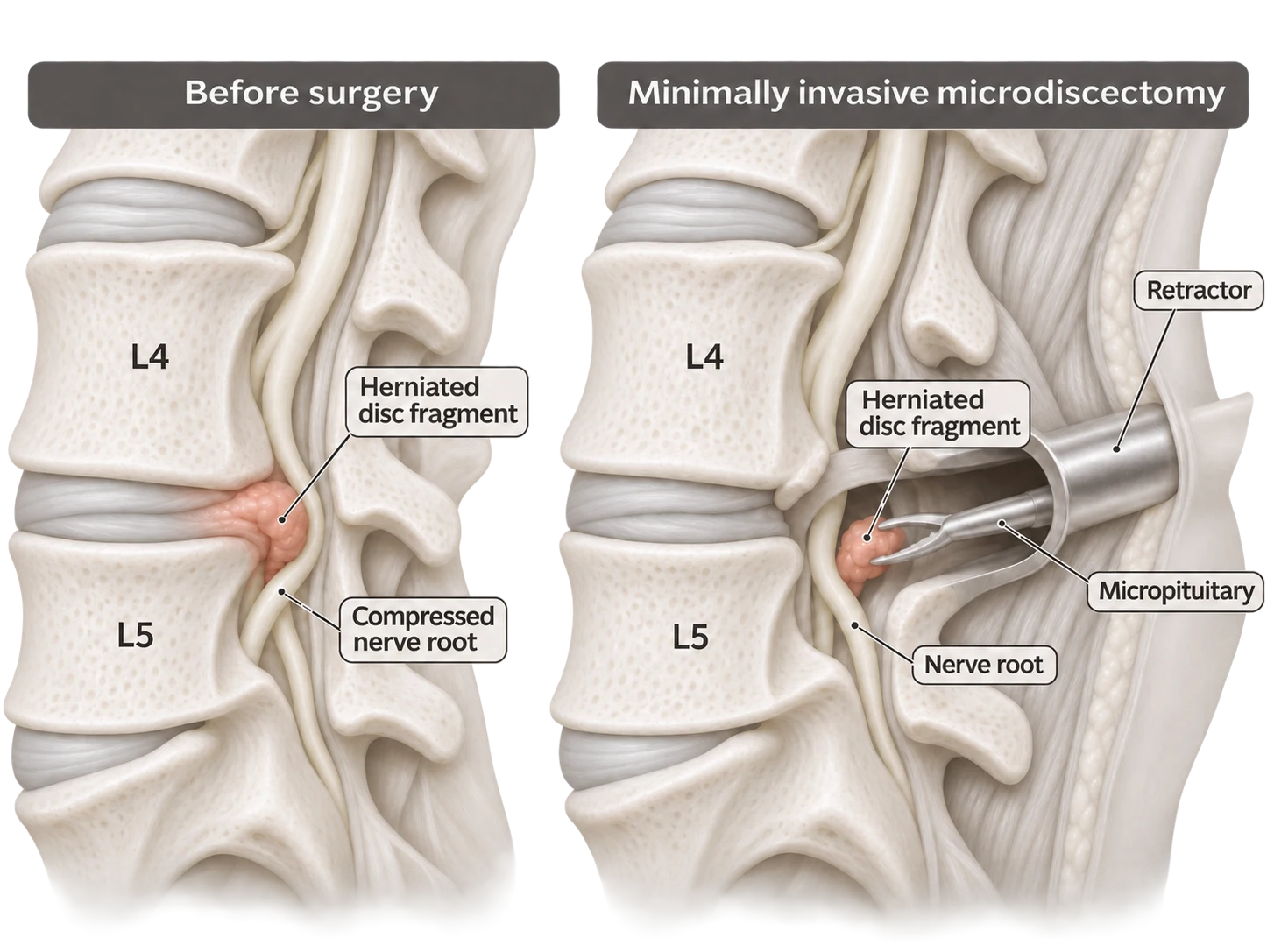
A lumbar microdiscectomy is an operation to remove the part of a herniated disc pressing on a spinal nerve in the lower back.
The procedure is performed through a small incision using a narrow retractor, an operating microscope and specialised microsurgical instruments. The surgeon removes the disc fragment causing nerve compression
The aim is to relieve pressure on the nerve and improve leg pain (sciatica), numbness or weakness.
Surgery is usually considered when significant leg symptoms have not improved with non-surgical treatment, or earlier if there is progressive muscle weakness.
Microdiscectomy is primarily performed to relieve nerve-related leg symptoms, rather than back pain alone.
Indications
When is this Procedure Recommended?
A lumbar microdiscectomy may be recommended when a herniated disc is pressing on a spinal nerve and causing:
- Persistent sciatica (pain radiating down the leg) that significantly affects daily activities and has not improved with non-surgical treatment.
- Significant or worsening weakness in the leg or foot, including foot drop.
Most patients with a herniated disc improve without surgery.
The decision to operate depends on the severity of your symptoms, your neurological examination and whether the MRI findings explain your symptoms.
The Procedure
What Happens During Surgery?
- The operation is performed under general anaesthetic
- A small incision is made in the lower back
- Microsurgical or minimally invasive techniques are used to reach the affected nerve
- A small amount of tissue or bone may be moved aside to safely expose the nerve
- The herniated portion of the disc pressing on the nerve is removed
- The nerve is checked to ensure it is adequately decompressed
- The wound is closed and a dressing is applied
Only the portion of the disc causing the compression is usually removed. The whole disc is not typically taken out.
Related Conditions
Benefits
Potential Benefits
The main aim of lumbar discectomy is to relieve nerve compression and improve symptoms caused by sciatica.
Potential benefits include:
- Relief of leg pain (sciatica)
- Improvement in numbness and tingling
- Recovery of strength, where weakness is present
- Improved walking tolerance and mobility
- Better sleep and day-to-day function
Leg pain often improves earlier than numbness or weakness. If the nerve has been compressed for a long time, recovery may be slower and may not always be complete.
Back pain may improve in some patients, but the procedure is primarily designed to treat leg symptoms from nerve compression.
After the procedure
Recovery After Surgery
Most patients spend one night in hospital and return home once they are walking safely and their pain is controlled.
Some discomfort around the incision is expected in the early recovery period. Many patients notice that their leg pain improves quite quickly, although nerve recovery can continue over weeks to months. Numbness and weakness may continue to improve over several months, particularly if the nerve was compressed for a long time.
Walking is encouraged from the first day after surgery. Activity is gradually increased as recovery progresses. Patients are usually advised to avoid heavy lifting, repetitive bending and strenuous activity during the first 4-6 weeks or as advised by your surgeon.
A consultation with a spine physiotherapist before surgery can help prepare for recovery.
Physiotherapy usually begins around 4 weeks after surgery and focuses on restoring movement, strength and confidence, with a gradual return to normal activities and work.
Driving can usually resume once pain is controlled, the patient can operate the vehicle safely and is no longer affected by strong pain medication.
This is generally reviewed at your 2-week postoperative appointment.
Many patients return to office-based work within 2–4 weeks. More physically demanding work may require a longer recovery period or a gradual return with modified duties.
Follow-up appointments are usually arranged at 2 and 6 weeks after surgery to assess wound healing, neurological recovery and return to normal activities.
Potential Complications
Risks and Complications
Most patients don’t have complications but recognised surgical risks include:
- Infection and bleeding
- Blood clots
- Anaesthetic complications
- Persistent or incomplete relief of symptoms
- Recurrent disc herniation
- Nerve injury
- Cerebrospinal fluid leak (dural tear)
- Need for further surgery in some cases
Your surgeon will discuss the risks most relevant to your condition and anatomy.
Considering Surgery for Sciatica or a Lumbar Disc Herniation?
Our team can help determine whether surgery is appropriate, explain the scan findings, and discuss both surgical and non-surgical treatment options.