
Carpal Tunnel Decompression
A short operation to relieve pressure on the median nerve at the wrist, helping improve numbness, tingling and pain in the hand, particularly at night.

Understanding the Procedure
What is Carpal Tunnel Decompression?
Carpal tunnel decompression, also called carpal tunnel release, is an operation to relieve pressure on the median nerve at the wrist.
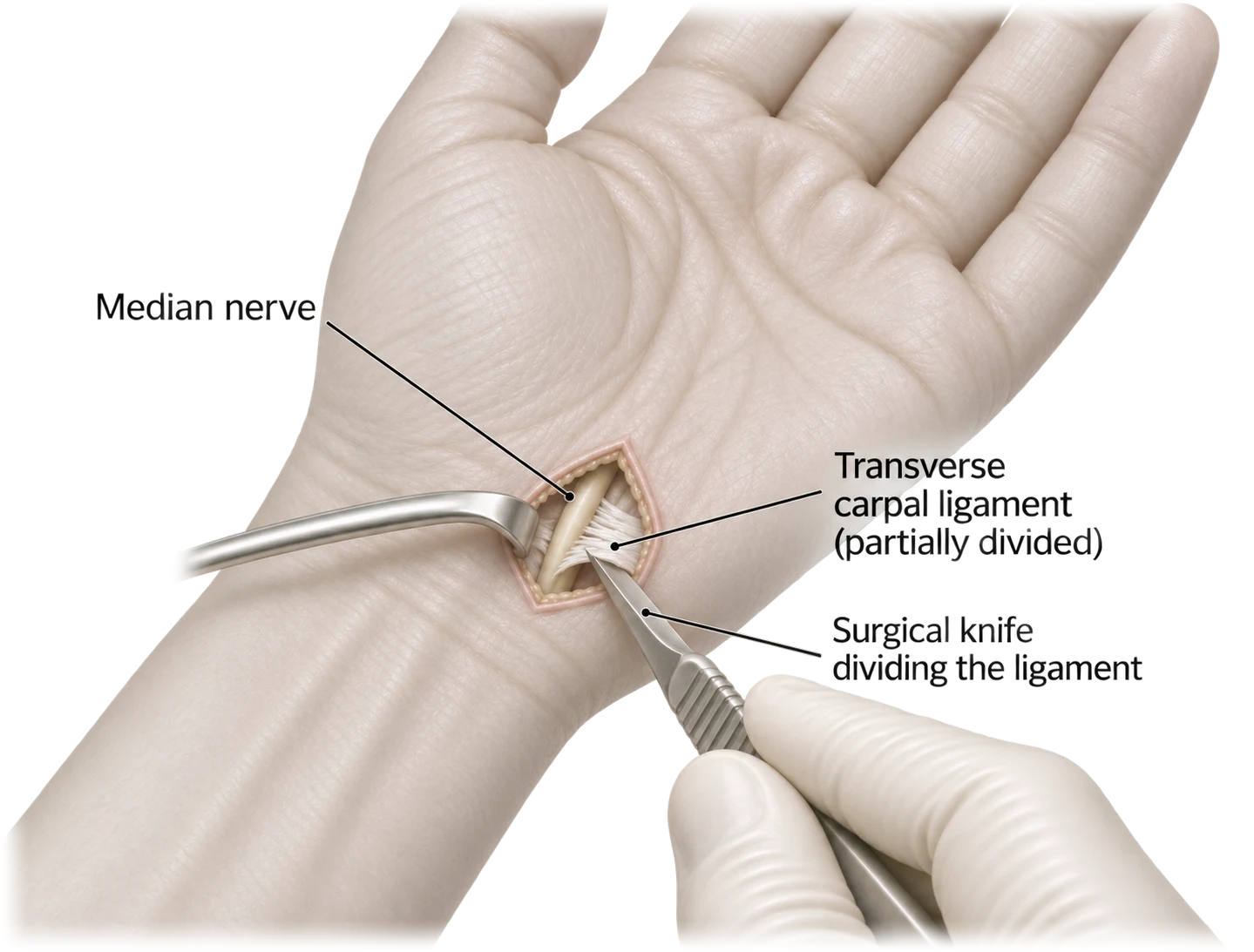
The nerve passes through a narrow tunnel beneath a strong ligament at the base of the palm. During surgery, the ligament is divided to create more space for the nerve. The nerve itself is not cut.
Understanding Carpal Tunnel Syndrome
Carpal tunnel syndrome can cause tingling, numbness or pain in the thumb, index, middle and part of the ring finger. Symptoms often wake people at night. More advanced compression can affect thumb strength and hand coordination.
Symptoms often develop gradually and may worsen over time if nerve compression persists.
Indications
When is this Procedure Recommended?
Surgery may be considered when symptoms remain troublesome despite non-surgical treatment, or when there are signs that the nerve is losing function.
Common reasons include:
- Persistent night-time numbness, tingling or pain that affects sleep or daily activities
- Numbness becoming constant
- Weakness or wasting of the muscles at the base of the thumb
The decision is based mainly on your symptoms and examination. Nerve conduction studies are helpful in diagnosis and guiding treatment.
The Procedure
What Happens During Surgery?
Carpal tunnel release is usually a day procedure. Your surgeon will explain the planned anaesthetic.
- A small incision is made near the base of the palm.
- The ligament forming the roof of the carpal tunnel is carefully identified and divided.
- This creates more space around the median nerve.
- The wound is closed and covered with a dressing.
Related Conditions
Benefits
Potential Benefits
The main aim is to relieve pressure on the median nerve and prevent further loss of nerve function.
Potential benefits include:
- Less night-time tingling and pain
- Improvement in numbness and hand sensation
- Better sleep and everyday hand use
- Recovery of thumb strength in some patients
When can I expect improvement?
- Night symptoms and tingling: Often improve within days to weeks.
- Numbness: May take weeks to months to recover.
- Weakness and grip strength: Recovery is often slower and may take several months.
Longstanding numbness or muscle weakness may not fully recover, even when the nerve has been successfully released.
After the procedure
Recovery After Surgery
Most patients go home on the same day.
Some soreness, swelling and tenderness around the palm or scar are common. These usually settle over several weeks.
Gentle finger movement is encouraged straight away. Use the hand for light activities as comfortable, but avoid heavy gripping or lifting until the wound has healed and your surgeon advises it is safe.
Most patients do not need formal hand therapy. Gentle exercises are usually sufficient, although a hand therapist may help if stiffness or weakness persists.
Resume driving when you can grip and control the steering wheel safely, are no longer affected by anaesthetic or sedating medication, and your surgeon has advised it is safe.
Office-based work may be possible within 1–2 weeks. Work involving heavy gripping, tools or repetitive hand use require additional time.
A review is usually arranged within 1–2 weeks to check the wound and assess recovery.
Potential Complications
Risks and Complications
Most patients don’t have complications but recognised surgical risks include:
- Infection or bleeding
- Delayed wound healing
- Problems related to anaesthesia
- Scar tenderness or pain around the base of the palm
- Persistent or returning symptoms
- Nerve injury
Your surgeon will discuss the risks relevant to your condition.
Considering Treatment for Carpal Tunnel Syndrome?
Our team can help determine whether surgery is appropriate and discuss all available treatment options.