Cervical Laminoplasty
A cervical laminoplasty is an operation used to create more space for the spinal cord in the neck. It is most commonly performed when spinal cord compression is causing symptoms such as walking difficulty, poor balance, hand clumsiness, numbness or weakness.
Understanding the Procedure
What is Cervical Laminoplasty?
Cervical laminoplasty is an operation to relieve pressure on the spinal cord in the neck.
It is performed when narrowing of the spinal canal compresses the spinal cord and affects its function (myelopathy).
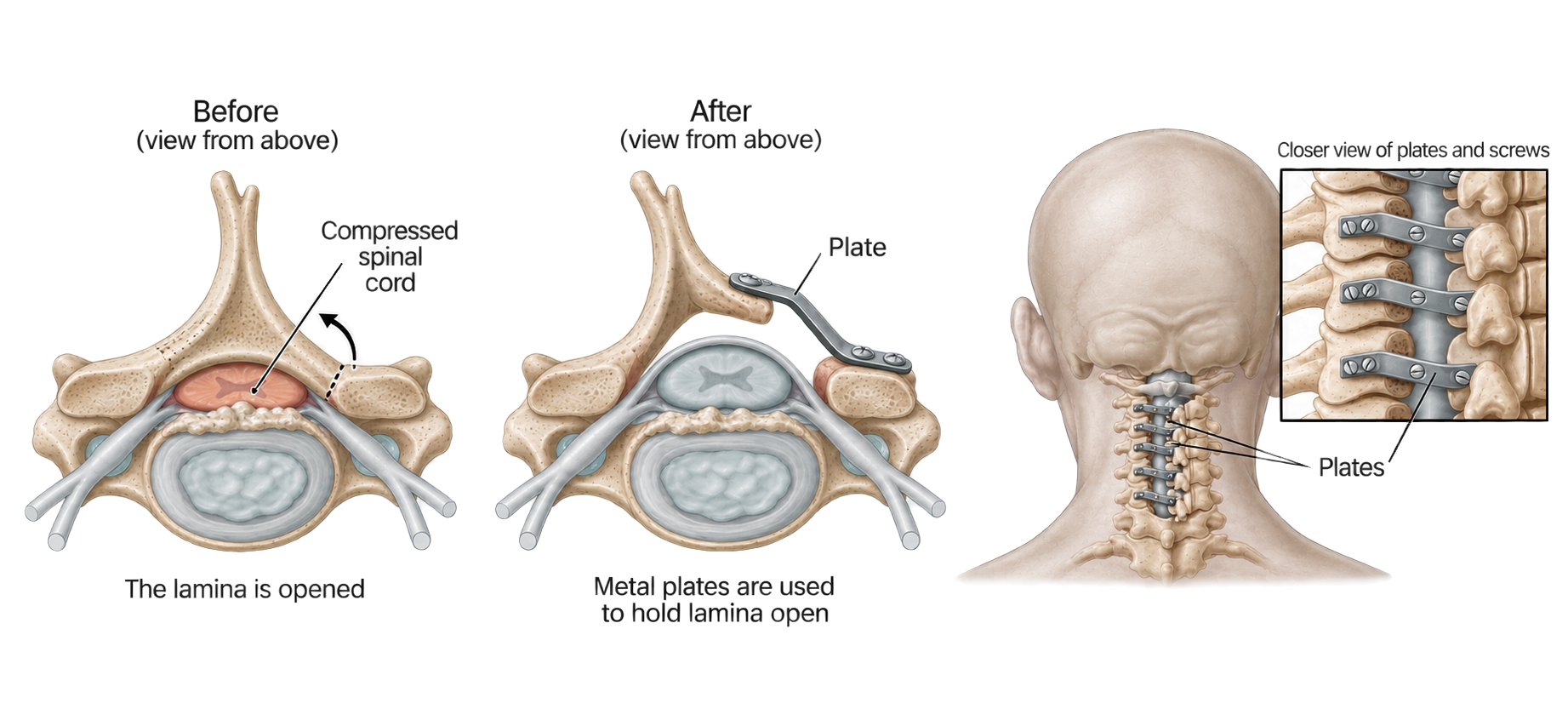
Through an incision at the back of the neck, the surgeon carefully opens the lamina (the bony roof of the spinal canal), like a hinged door, and secures it with small plates.
This creates more room for the spinal cord without the need for spinal fusion, helping to preserve spinal stability and neck movement.
Indications
When is this Procedure Recommended?
Cervical laminoplasty may be recommended when narrowing of the spinal canal puts pressure on the spinal cord and affects its function (myelopathy).
Common symptoms include:
- Difficulty walking or maintaining balance
- Clumsiness or loss of hand coordination
- Weakness in the arms or legs
- Worsening neurological function
The main aim of surgery is to prevent further spinal cord damage, although some symptoms may improve.
Not everyone with spinal cord compression on MRI needs surgery. The decision depends on your symptoms, neurological examination and scan findings.
The Procedure
What Happens During Surgery?
- An incision is made at the back of the neck.
- The muscles are gently moved aside to expose the cervical spine.
- The lamina is carefully cut on one side and hinged open on the other side to widen the spinal canal.
- Small plates are used to hold the lamina open in its new position.
- This creates more space for the spinal cord and relieves compression.
- The wound is closed and a dressing is applied.
Related Conditions
Benefits
Potential Benefits
The main aim of cervical laminoplasty is to relieve pressure on the spinal cord and prevent further neurological deterioration. Some patients also experience improvement in their symptoms.
Potential benefits include:
- Improved walking and balance
- Better hand coordination and dexterity
- Improvement in weakness or numbness
- Preservation of neck movement without fusion, although some stiffness may remain
When can I expect improvement?
- Walking and balance: May improve over the first few weeks to months.
- Hand function and strength: Recovery may take several months and can continue for a year or longer.
- Numbness: May improve gradually but can persist, particularly when compression has been longstanding.
Recovery varies between patients. Most neurological improvement occurs during the first 6–12 months, although some recovery may continue for up to two years.
The extent of recovery depends partly on how severely and for how long the spinal cord was compressed before surgery.
After the procedure
Recovery After Surgery
Most patients spend 2–3 nights in hospital and return home once they are walking safely and pain is controlled.
Some neck pain, wound discomfort and muscular stiffness are common in the early recovery period. These symptoms usually improve over the first few weeks.
Walking is encouraged from the first day after surgery. Light activity is helpful, but heavy lifting and strenuous activity should be avoided during early recovery.
A preoperative appointment with a spine physiotherapist can help prepare you for surgery and provide advice about early recovery and exercise restrictions.
A structured Physio program can begin around 4-6 weeks after surgery and focuses on mobility, posture, strength, confidence and return to normal activity.
You can return to driving when you can turn your neck comfortably, control the vehicle safely and are no longer affected by pain or medication. Follow your surgeon's advice before resuming driving.
Many patients return to office-based work within 4–6 weeks. More physically demanding work may require longer recovery.
Follow-up appointments are usually scheduled at 2 weeks and 6 weeks after surgery, with additional follow-up if needed.
Potential Complications
Risks and Complications
Most patients don’t have complications but recognised surgical risks include:
- Infection or bleeding
- Blood clots
- Anaesthetic complications
- C5 nerve palsy (new weakness)
- Nerve or spinal cord injury
- Leakage of spinal fluid
- Neck pain or stiffness
- Occasionally need for further surgery
Your surgeon will discuss the risks relevant to your condition.
Considering Surgery for Cervical Myelopathy or Spinal Stenosis?
Not everyone with spinal cord compression needs surgery. The decision depends on your symptoms, neurological examination, MRI findings and the pattern of compression.
Our team can help determine whether cervical laminoplasty is appropriate and explain the alternatives.